Some links in this article are affiliate links. If you buy through them we earn a small commission at no extra cost to you. We only recommend products we genuinely use and trust.
Most cyclists know they should maintain their bike. Far fewer know exactly when to do what. The result is either neglect (riding until something breaks) or the opposite: over-maintaining, stripping bolts, and wasting money on parts that didn't need replacing yet.
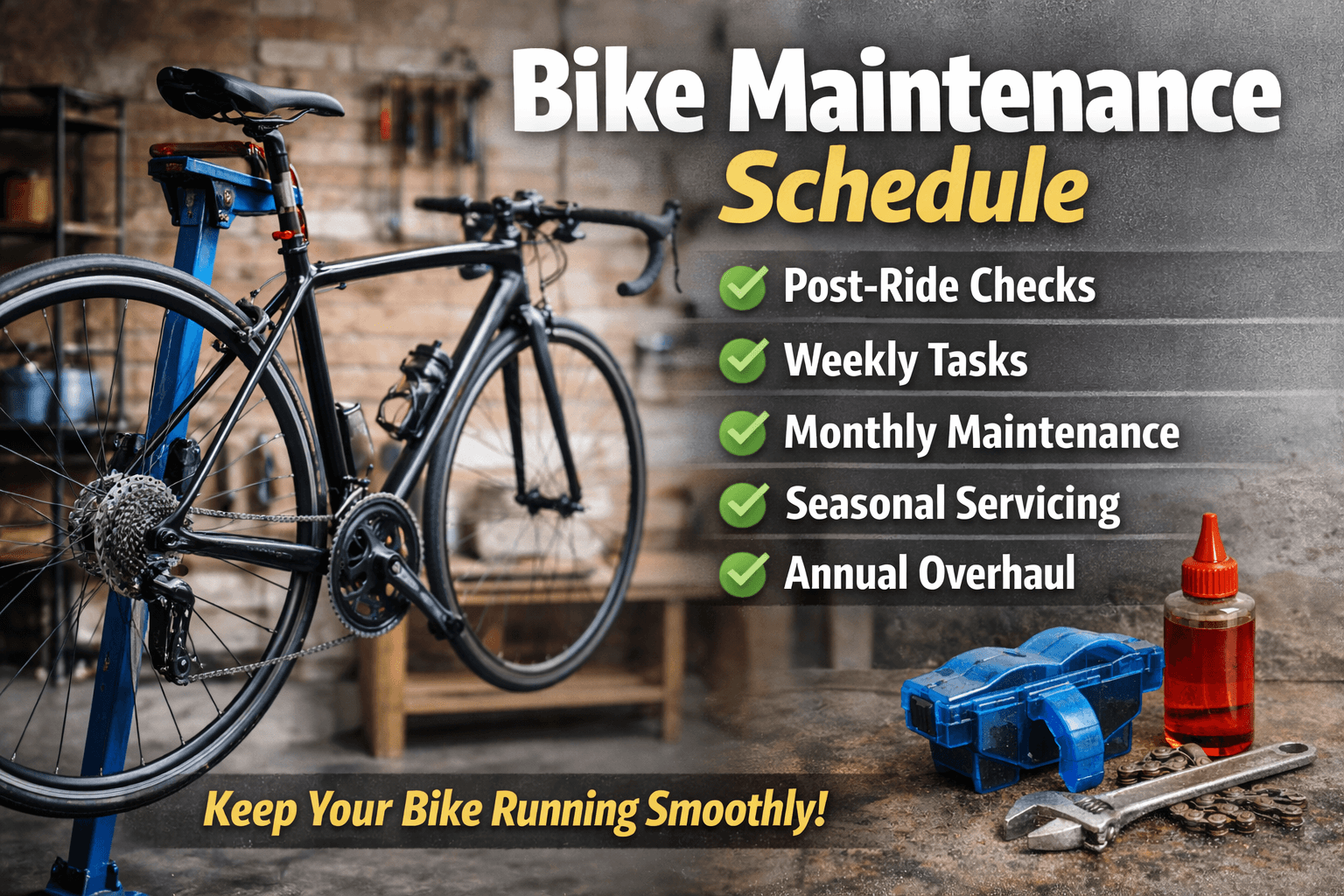
A good maintenance schedule sits in the middle. It's based on distance, time, and conditions, not guesswork. Here's the one we use, broken down into five tiers from post-ride to annual.
Post-ride: the 2-minute check
This isn't a full inspection. It's a quick habit that catches problems early, before they strand you on a ride.
- Wipe the chain - A dry rag or baby wipe run through the chain removes surface grime. Takes 30 seconds and dramatically extends chain life.
- Check tyre condition - Glance at both tyres for cuts, embedded glass, or flints. Remove anything stuck in the rubber before it works its way through.
- Check tyre pressure - Tyres lose pressure overnight, especially latex inner tubes and tubeless setups. A quick squeeze tells you if you need to top up before the next ride.
- Listen for new noises - Did something start clicking, creaking, or rubbing during the ride? Note it now while it's fresh. These things are easy to forget by the next ride.
You don't need tools for any of this. Just build the habit of spending two minutes with your bike after you get home.
Weekly: the quick once-over
If you ride three or more times a week, do this every weekend. If you ride less frequently, do it every second or third ride.
Drivetrain
- Lube the chain - Apply lube to each link, backpedal a few revolutions, then wipe off the excess. More lube is not better. A thin film on the rollers is all you need. Muc-Off Dry Lube is a great all-rounder for dry conditions, or Finish Line Wet Lube if you're riding through winter.
- Check chain wear - If you're riding 200+ km a week, checking chain stretch weekly isn't overkill. A chain checker takes five seconds and saves you from the expensive mistake of running a stretched chain into your cassette. See our complete chain replacement guide for the details.
- Inspect brake pads - Rim brake pads should have visible grooves. Disc brake pads should have at least 1 mm of material. In wet UK conditions, disc pads can wear through in 1,000–2,000 km, so don't assume they're fine just because you fitted them recently.
Wheels and tyres
- Inflate to correct pressure - Check with a track pump with a gauge, not just a squeeze. Proper pressure varies by tyre width, rider weight, and conditions, but consistency matters more than perfection. Pick a pressure and stick to it.
- Spin each wheel - Lift the bike and spin each wheel slowly. Watch for wobbles (the rim moving side to side) which indicate a wheel that needs truing. A slight wobble is normal. A wobble that contacts the brake pad isn't.
Bolts
- Check quick releases or thru-axles - Make sure your wheels are secure. This sounds obvious, but a loose thru-axle is surprisingly common after removing a wheel for transport.
Monthly: the deeper look
Set a calendar reminder or, better yet, let your distance tracking tell you when a month's riding has accumulated. These checks go a step further than the weekly once-over.
Drivetrain deep clean
- Degrease and re-lube the chain - Once a month (or every 500–800 km), give the chain a proper clean rather than just a wipe. A chain cleaning device with degreaser does the job well. Let it dry fully before re-lubing.
- Clean the cassette - Floss between the cogs with a rag. Built-up grime on the cassette accelerates chain wear and makes shifting sluggish.
- Clean the chainrings - Wipe down the front chainrings. Check the teeth for the classic shark-fin profile that indicates wear.
- Check derailleur pulleys - The jockey wheels on your rear derailleur wear out too. Spin them by hand and they should rotate freely without excessive play.
Brakes
- Rim brakes: Check pad alignment and toe-in. The front of the pad should contact the rim fractionally before the rear. Replace pads if the grooves have worn smooth.
- Disc brakes: Check rotor thickness with a digital caliper. Most rotors have a minimum thickness stamped on them (typically 1.5 mm). Also check for rotor contamination. If braking has become noisy and weak, the pads or rotor may be contaminated with oil.
Cables and housing
- Shift through all gears - Front and rear. If shifting hesitates or the chain won't reach the largest or smallest cog, your cables may have stretched or the housing may be gunked up.
- Check brake lever feel - Pull both brake levers. They should feel firm and consistent. A spongy hydraulic lever means air in the system. A cable lever that pulls to the bar means cable stretch or worn pads.
Wheels
- True check - Spin each wheel in the frame and watch the gap between rim and brake pad (rim brakes) or use the frame as a reference (disc). If the wobble is more than 1–2 mm, it's worth truing.
- Check spoke tension - Squeeze pairs of spokes together. They should all feel roughly equal. A noticeably loose spoke is a wheel failure waiting to happen.
Frame and cockpit
- Check bar tape - Is it coming unwrapped? Slipping? Worn through on the tops? Bar tape is cheap and easy to replace, and worn tape costs you grip and comfort.
- Check saddle and seatpost - Sit on the bike and rock side to side. The saddle should not move. Check the seatpost clamp bolt is tight.
- Inspect the frame - Look for cracks, especially around the head tube, bottom bracket, and dropout areas. Carbon frames can develop cracks that are hard to spot under paint, so look closely. Also check for any paint chips on metal frames that could lead to corrosion.
Seasonal: every 3–6 months
These tasks align roughly with the natural cycling seasons in the UK: a pre-season service in spring, a mid-season check in summer, and a winter prep in autumn.
Cables and housing
- Replace gear cables - Gear cables stretch and fray over time. If shifting has gradually worsened despite adjustments, fresh cables will transform it. Budget around £5–10 for cables plus fitting time.
- Replace brake cables (cable brakes) - Same principle. Frayed or corroded brake cables reduce stopping power and feel.
- Bleed hydraulic brakes - If you're on hydraulic disc brakes, a bleed every 6–12 months keeps the lever feel sharp. Shimano mineral oil systems are straightforward to DIY. SRAM DOT fluid systems are a bit more involved and the fluid is hygroscopic (absorbs water over time), so regular bleeds matter more.
Bearings
- Headset - Straddle the front wheel and rock the bike back and forth. Clunking means the headset bearings are loose or worn. Lift the front end and turn the bars. They should sweep smoothly with no notchy feeling.
- Bottom bracket - Remove the chain from the chainring and spin the cranks by hand. They should spin freely. Gritty resistance or play (wobble in the crank arms) means the bottom bracket needs attention. Press-fit BBs are particularly prone to creaking and early wear.
- Wheel hubs - Grab the top of each wheel and rock it side to side. Any knocking indicates loose hub bearings. Spin the wheel off the bike and it should spin freely for a long time.
Tyres
- Replace if needed - Road tyres typically last 3,000–8,000 km depending on the compound, rider weight, and conditions. Rear tyres wear faster than fronts. Look for a flattened profile, visible casing threads, or frequent punctures as signs it's time.
- Swap front and rear - Some riders rotate tyres to even out wear. If you do this, always move the better tyre to the front. A front tyre blowout is far more dangerous than a rear.
Tubeless
- Top up sealant - Tubeless sealant dries out every 3–6 months regardless of how much you ride. Remove the valve core and check. If the sealant has turned to lumps or dried completely, strip the tyre, clean out the old sealant, and add fresh. Stan's No Tubes is the go-to for most riders.
Cleats and pedals
- Check cleat wear - Worn cleats cause sloppy engagement and can release unexpectedly. Most cleats have wear indicators. SPD-SL cleats in particular wear quickly if you walk on them.
- Service pedals - Pedal bearings can be overhauled on most models. If the pedal has play or doesn't spin smoothly, it's time.
Annual: the full overhaul
Once a year, ideally in winter when you're riding less, strip the bike down and go through everything. This is the service that keeps a bike running well for years rather than gradually deteriorating.
Full strip and clean
- Remove all components - Wheels, seatpost, stem (if practical), pedals, bottom bracket. Clean the frame thoroughly, including inside the seatpost tube and head tube.
- Inspect the frame - With everything removed, it's the best time to spot cracks, corrosion, or damage that's hidden when the bike is built up.
- Clean and re-grease all threads and contact points - Seatpost, stem bolts, bottom bracket threads, pedal threads, axle threads. Use anti-seize compound on metal-to-metal contacts and carbon assembly paste on carbon-to-carbon or carbon-to-metal surfaces.
Replace wear items
Even if they seem fine, some items should be replaced annually on a well-ridden bike (5,000+ km/year):
- Bar tape - It absorbs sweat and grime. Fresh tape improves grip and comfort noticeably. Lizard Skins DSP is a popular choice for its durability and feel.
- Brake pads - If you haven't replaced them already during the year, do it now.
- Cables and housing - Fresh cables are cheap insurance for reliable shifting and braking.
- Chain - You'll likely have replaced this already if you're tracking wear, but if not, now's the time.
- Rim tape - Often forgotten. Rim tape can shift or degrade, exposing spoke holes and causing punctures from the inside.
Bearings service
- Headset, bottom bracket, wheel hubs - Clean and re-grease all bearings. Replace any that feel rough or have pitting. Sealed cartridge bearings are relatively cheap and easy to swap.
- Derailleur pulleys - Replace if the teeth are visibly worn or the bushings have play.
Wheels
- Full true and tension - A proper wheel true with even spoke tension makes a noticeable difference to ride quality. If you're not confident doing this yourself, a bike shop will typically charge £10–20 per wheel.
- Check rim wear (rim brakes) - Rim brake surfaces wear over time. Many rims have a wear indicator groove or dimple. If it's gone, the rim wall is too thin and the wheel needs replacing.
A note on conditions
Everything above assumes typical UK riding: a mix of dry and wet, mostly paved roads. If your conditions differ, adjust accordingly:
- Wet and winter riding - Halve the intervals for chain, brake pads, and cables. Water and grit accelerate everything.
- Dry summer only - You can push most intervals by 25–50%.
- Off-road / gravel - Similar to wet road riding. Mud and dust are as hard on components as rain.
- Turbo trainer - Sweat is surprisingly corrosive. Wipe the bike down after every session and check the headset and handlebar areas for corrosion more frequently.
Stop guessing, start tracking
The hardest part of a maintenance schedule isn't knowing what to do. It's remembering when you last did it. Was that chain fitted 2,000 km ago or 4,000? Did you bleed the brakes in autumn or was it the spring before?
WrenchLog tracks component mileage automatically by syncing with Strava. Set expected lifespans for each component and you'll get alerts when something is due for attention. No spreadsheets, no forgotten services. Just ride and let WrenchLog keep track.