Some links in this article are affiliate links. If you buy through them we earn a small commission at no extra cost to you. We only recommend products we genuinely use and trust.
Your chain is the hardest-working part of your drivetrain. Every pedal stroke loads it with force, and over thousands of kilometres the pins and rollers wear down, causing the chain to "stretch." A stretched chain doesn't just shift poorly. It accelerates wear on your cassette, chainrings, and derailleur pulleys, turning a cheap fix into an expensive one.
Replacing your chain at the right time is the single best thing you can do to protect your drivetrain. Here's everything you need to know.
What is chain stretch?
Despite the name, your chain doesn't actually stretch like a rubber band. What happens is the metal pins connecting each link wear down slightly, increasing the distance between them. A new chain has exactly half an inch (12.7 mm) between pin centres. As the pins wear, that gap grows, and that's what we call chain stretch or chain elongation.
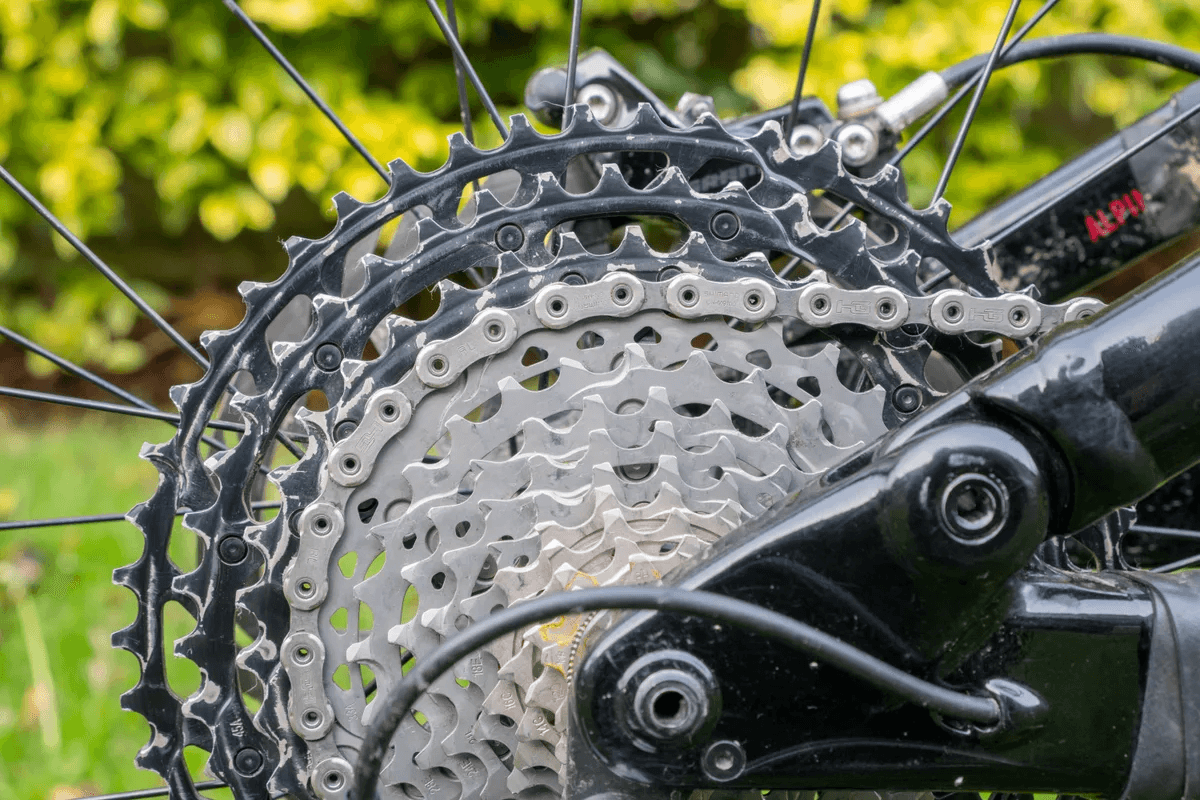
When the gap increases, the chain no longer meshes cleanly with your cassette and chainring teeth. The teeth themselves start to wear into a shark-fin shape to match the stretched chain. Once that happens, a new chain will skip on the worn cogs, which means you need to replace the cassette too.
How to measure chain wear
There are two reliable methods:
1. Chain checker tool
A dedicated chain checker is the fastest and most accurate way. You hook one end onto a chain pin, and the gauge tells you the elongation percentage:
- 0.5% wear - Time to replace the chain (11/12-speed)
- 0.75% wear - Time to replace the chain (9/10-speed)
- 1.0% wear - The cassette is likely damaged too
For 11 and 12-speed drivetrains, the narrower chain and closer tolerances mean you should replace at 0.5%. Waiting until 0.75% on a 12-speed system almost guarantees you'll need a new cassette.
Recommended chain checkers:
- Park Tool CC-2 - The industry standard, simple and accurate
- Pedro's Chain Checker II - A solid budget alternative
- Shimano TL-CN42 - Lightweight and pocket-friendly
2. Ruler method
If you don't have a checker, a ruler works in a pinch. Measure 12 complete links (24 half-links), which should be exactly 12 inches on a new chain. If it measures 12 1/16 inches (0.5% stretch) or more, it's time for a new chain.
How long does a bike chain last?
Chain life varies enormously depending on conditions, maintenance, and drivetrain type:
| Drivetrain | Typical lifespan |
|---|---|
| 12-speed road | 2,500–4,000 km |
| 11-speed road | 3,000–5,000 km |
| 10-speed road | 4,000–6,000 km |
| Mountain bike (any speed) | 1,500–3,000 km |
| Single-speed / fixie | 5,000–10,000 km |
These are rough guides. Riders who clean and lube their chain regularly can push towards the top of the range. Riders in wet, gritty conditions may hit the bottom end or worse.
Signs your chain needs replacing
Beyond measuring, there are some telltale signs:
- Poor shifting - Hesitation, ghost shifts, or the chain jumping between gears
- Chain suck - The chain sticks to the chainring and gets pulled up instead of releasing
- Visible rust or stiff links - Links that don't bend freely cause rough pedalling
- Noise - A worn drivetrain gets noticeably louder, with clicking and grinding
- The chain "looks" long - You can pull it away from the chainring and see daylight under the links
If you notice any of these, check chain wear immediately.
How to make your chain last longer
A clean, well-lubricated chain lasts significantly longer than a neglected one. Here are the basics:
Clean regularly
You don't need fancy equipment. A rag and some degreaser every few rides goes a long way. Wipe the chain down after wet rides. If you want to go further, a chain cleaning device with solvent does a thorough job.
Use the right lube
- Dry lube for dry conditions. Attracts less dirt, but washes off in rain.
- Wet lube for rain and winter. Stays put in the wet, but picks up more grime.
- Wax for maximum cleanliness and longevity. Requires more effort to apply but dramatically extends chain life.
Our picks:
- Muc-Off Dry Lube - Great all-round dry lube
- Finish Line Wet Lube - Reliable winter choice
- Silca Super Secret - Premium drip wax for maximum chain life
Avoid cross-chaining
Running the chain at extreme angles (big ring + biggest cog, or small ring + smallest cog) increases wear. Modern drivetrains handle this better than older ones, but it's still worth avoiding when practical.
Replace before it's too late
This is the key point. A chain costs around £15–30. A cassette costs £30–80. Chainrings cost £30–100+. If you replace the chain on time, you protect everything else.
What happens if you wait too long?
If your chain stretches past 0.75% (or 0.5% on 12-speed), the cassette teeth will have worn to match. When you fit a new chain, it won't mesh with the worn teeth. It'll skip under load, especially in the gears you use most. At that point you need a new cassette, and possibly new chainrings too.
What was a £20 chain replacement becomes a £100+ drivetrain overhaul. We've seen it hundreds of times, and it's completely avoidable with regular checks.
Automate it with WrenchLog
Remembering to check your chain every few hundred kilometres is the hard part. WrenchLog tracks component mileage automatically by syncing with Strava. Set your chain's expected lifespan, and you'll get a warning when it's approaching replacement, before it damages anything else.
No spreadsheets, no guessing, no forgotten maintenance. Just ride and let WrenchLog handle the rest.